
Historical evidence shows where the Sabbath has been kept from early Christian times to the present day. By Gordon Anderson
Reading time: 17 minutes
God has impressively preserved His holy Sabbath over the centuries - right up to the present day.
Although the writings of the martyrs were often consigned to the flames or otherwise destroyed, we have ample evidence of Sabbath-keeping Christians: in writings from their own pens that survived persecution, and in some cases even in accounts from their enemies.
The Waldensians were known for their Sabbath-keeping for hundreds of years. They were therefore often called Sabbati or Insabbati. Protected by the Italian, French and Swiss Alps, they defied the edicts of Rome for centuries.
Entire countries kept the Sabbath: in Bohemia (Czech Republic) and Scotland, the Sabbath was kept until the 12th century. In Abyssinia (Ethiopia) it was even observed until the 17th century.
The evidence from the Eastern Church is fascinating. People in Persia, China and India adopted the Sabbath very early on.
Below are just a few of the many hundreds of historical documents that exist for the Sabbath. These are not records of Sabbath-keeping Jews, but exclusively of Christians throughout the Christian era who celebrated the Sabbath, which their Lord and Master Jesus also kept.
FIRST CENTURY
Early Christians
"Then the spiritual descendants of Abraham fled to Pella, on the other side of the Jordan, where they found a safe haven and were able to serve their Master and keep his Sabbath. "1
"The seventh-day Sabbath was ... celebrated by Jesus, the apostles and the early Christians until the Council of Laodicea virtually abolished its observance. "2
SECOND CENTURY
Early Christians
"The Sabbath was a strong bond ... and by keeping the Sabbath holy, they followed not only the example but also the commandment of Jesus. "3
"The Gentile Christians also kept the Sabbath. "4
Eastern Church
"It is certain that the Sabbath of antiquity ... was still kept by the Christians of the Eastern Church more than three hundred years after the death of our Savior. "5
THIRD CENTURY
Africa - Alexandria
"Sabbath observance is proper for every righteous person among the saints. There remains therefore a sabbatismos, that is, a keeping of the Sabbath, for God's people [Hebrews 4:9]. "6
Palestine to India (Eastern Church)
"As early as 225 AD, large bishoprics or associations of the (Sabbath-keeping) Eastern Church existed from Palestine to India. "7
India - Buddhist dispute (220 AD)
"The Kushan dynasty in northern India convened a famous council of Buddhist priests in Vaisalia to achieve uniformity among the Buddhist monks in the observance of their weekly Sabbath. Some were so impressed by the Old Testament scriptures that they had begun to observe the Sabbath. "8
FOURTH CENTURY
Italy and the Orient (4th century)
"It [the Sabbath] was common practice in the Eastern churches and some Western churches... "9
Orient and almost the entire world
"The Christians of antiquity kept Saturday or Sabbath very conscientiously ... It is certain that all the churches in the Orient and in most of the world celebrated the Sabbath. "10
Ethiopia
"For more than seventeen centuries the Ethiopian church celebrated Saturday as the holy day of the fourth commandment. "11
Arabia, Persia, India, China
"Mingana proves that in 370 AD, Ethiopian Christianity (a Sabbath-keeping church) was so popular that its famous leader Musaeus traveled widely in the East and worked for the church in Arabia, Persia, India and China. "12
Italy - Milan
"The famous Bishop of Milan, Ambrose, said that he kept Saturday in Milan but Sunday in Rome. This gave rise to the saying: 'When in Rome, do as the Romans do!'"13
Spain - Synod of Elvira (305 AD)
"It was decided that the false doctrine that every Sabbath must be fasted should be opposed." This synodal resolution opposed the policy introduced by the Roman Church of making the Sabbath a fast day in order to degrade it and rob it of its joy.
Persia - 40 years of persecution under Shapur II (335-375 AD)
"They [the Christians] despise our sun god, hold services on Saturday and desecrate the holy earth because they bury the dead in it. "14
"Did not Zarathustra, the holy founder of our divine faith, a thousand years ago decree Sunday in honor of the sun and replace the Sabbath of the Old Testament? "15
Council of Laodicea (365 AD)
"Canon 16 - On Saturday the Gospels and other parts of Scripture should be read aloud ... Canon 29 - Christians should not Judaize and be idle on Saturday, but should work on that day; but they should especially honor the Lord's Day and, if possible, not work on it as Christians. "16
FIFTH CENTURY
Constantinople
"The people of Constantinople, and almost everywhere, assemble both on the Sabbath and on the first day of the week; a custom which is not observed at all in Rome or Alexandria. "17
Pope Innocent (402-417)
"Innocent ordered that fasting should always be observed on Saturday or the Sabbath. "18
Africa
"Augustine complained that one of two neighboring churches in Africa celebrated the seventh-day Sabbath while the other fasted on it. "19
Christians
"Even into the 5th century, the Jewish Sabbath observance was maintained by the Christian church. "20
"In the days of Jerome (420 AD), even the most pious Christians performed ordinary work on Sunday. "21
Spain (400 AD)
"Ambrose kept the seventh day holy as the Sabbath (as he himself says). Ambrose had great influence in Spain, where the Saturday Sabbath was also observed. "22
SIXTH CENTURY
Scottish Church
"In this latter case they probably followed the custom of which we find traces in the early Celtic Church of Ireland: They kept Saturday as the Sabbath, and rested on it from all their labors. "23
Ireland
"In the early Celtic Church of Ireland, the day of rest was Saturday or the Sabbath. "24
Rome
Around 590 AD, Pope Gregory wrote a letter to the Roman people branding those who held that no work should be done on the seventh day as "prophets of the Antichrist. "25
SEVENTH CENTURY
Scotland and Ireland
"It appears that in the early Celtic church of both Ireland and Scotland, Saturday, the Jewish Sabbath, was observed as a day of rest. The fourth commandment was observed literally on the seventh day of the week. "26
Rome
Pope Gregory I (590-604 AD) wrote against "Roman citizens who forbid doing any work on the Sabbath. "27
EIGHTH CENTURY
Persia and Mesopotamia
"The hills of Persia and the valleys of the Tigris and Euphrates echoed with their songs of praise. They brought in their harvests and paid their tithes. On the Sabbath they went to their churches to worship God. "28
India, China, Persia
"The observance of the seventh-day Sabbath was widespread and permanent among the believers of the Eastern Church and the St. Thomas Christians in India, who were never associated with Rome. It was also maintained by the groups that separated from Rome after the Council of Chalcedon, namely the Ethiopians, Syrian Orthodox, Maronites and Armenians. "29
China (781 AD)
In 781 AD, the famous China Monument was carved in marble to record the growth of Christianity in China. The inscription was discovered during excavations near the city of Xi'an in 1625. It reads: "On the seventh day, we offer sacrifices after purifying our hearts and receiving forgiveness for our sins. "30
NINTH CENTURY
Bulgaria
"At the beginning of the evangelization of Bulgaria, it was taught that no work should be done on the Sabbath. "31
Pope Nicholas I wrote in a letter to Khan Boris I of Bulgaria: "One must rest from work on Sunday, but not on the Sabbath. "32
Constantinople
Photios I, Patriarch of Constantinople, accused the papacy [at the counter-synod that deposed Nicholas]: "Against church law, they caused the Bulgarians to fast on the Sabbath. "33
Athingans/Melchizedekites - the untouchables (Anatolia)
Cardinal Hergenrother says that they had a close relationship with Emperor Michael II (821-829) and testifies that they kept the Sabbath.34
Bulgaria
"In the 9th century, Pope Nicholas I sent the ruling Khan of Bulgaria a long document in which he said that one should not work on Sunday, but one should work on the Sabbath. The head of the Greek Church felt offended by the interference of the papacy and declared the pope excommunicated. "35
TENTH CENTURY
Scotland
"They worked on Sunday, but kept Saturday as the Sabbath. "36
Kurdistan - Eastern Church
"The Nestorians do not eat pork and keep the Sabbath. They do not believe in auricular confession or purgatory. "37
Waldensians
"And since they kept no other day of rest than the Sabbath, they were called Insabathas. "38
ELEVENTH CENTURY
Scotland
"It was held that Saturday was the proper Sabbath on which to abstain from work. "39
Synod of Clermont (1095 AD)
"During the First Crusade, Pope Urban II issued a decree at the Synod of Clermont to abolish the Sabbath in honor of the Virgin Mary. "40
Constantinople
"Because you keep the Sabbath with the Jews and the Lord's Day with us, you seem to be imitating the sect of the Nazarenes. "41 - The Nazarenes were a Christian religious community.
Greek Church
"As everyone knows, there is a bitter dispute between Greeks and Romans over the observance of the Sabbath. "42 - About the secession of the Greek Church from the Roman Church in 1054
TWELFTH CENTURY
Lombardy
"Traces of Sabbath-keepers can be found in Lombardy at the time of Gregory I, Gregory VII and in the 12th century. "43
Waldensians
Robinson reports on some Waldensians in the Alps - called Sabbati, Sabbatati, Insabbatati or even more frequently Inzabbatati. "They are said to have been so called from the Hebrew word Sabbat, because they kept Saturday as the Lord's day. "44
"Among the documents we have from these peoples is a declaration on the Ten Commandments, which Boyer dates to 1120. The observance of the Sabbath by abstaining from worldly work is emphatically demanded. "45
Hungary, France, England, Italy, Germany
"The spread of heresy at this time is almost unbelievable. From Bulgaria to the Ebro, from northern France to the Tiber - everywhere we find them [the Sabbath-keeping Passagini]. Whole countries are infested, like Hungary and the south of France; in many other countries they are present in large numbers: in Germany, Italy, the Netherlands and even in England they are at work. "46
Wales
"There is much evidence that the Sabbath was kept throughout Wales until 1115 AD, when the first Roman bishop was installed at St. David's. However, the old Welsh Sabbath-keeping churches still did not fully bow the knee to Rome, but fled into hiding. "47
France
"For 20 years, Pierre de Bruys moved the south of France. He particularly emphasized a day of worship that was recognized at that time by the Celtic churches in the British Isles, among the Paulicians and in the great Eastern Church, namely the seventh day of the fourth commandment. "48
THIRTEENTH CENTURY
Waldenses
"They say that ... Pope Silvester was the Antichrist mentioned in the epistles of St. Paul, as if he were the son of perdition. [They also say] that one should keep the Sabbath. "49 (Roman Catholic author)
"The heresy of the Waldenses or the poor people of Lyons goes back to antiquity. For some say it has lasted since the days of Pope Silvester; others, since the days of the apostles. "50
Europe
"The Paulicians, Petrobrusians, Passagini, Waldensians and Insabbati were large Sabbath-keeping groups in Europe until 1250 AD. "51
Passagini
Dr. Hahn says that when the Passagini referred to the fourth commandment in support of the Sabbath, the Roman priests replied, "The Sabbath is a symbol of the eternal rest of the saints. "52
FOURTEENTH CENTURY
Ghana
"In my country, Ghana, many indigenous tribes call Saturday Memeneda, literally, 'Day of the I AM'. Since it was historically designated as a special day for the worship of God (Onyame), it is also called Memeneda Dapaa, 'good or precious day'. Since God's day is Saturday and since every male child born on this day is called Kwame, God is often called Onyame Kwame, 'the God whose day is Saturday'. It is discouraged to engage in personal or worldly activities on Memeneda, including attending markets and funerals. Wars cannot be declared or waged on this day. This custom of observing Saturday existed long before the birth of Prince Henry the Navigator, a Portuguese explorer who brought Roman Catholic priests and missionaries to Ghana in the 15th century. But since the arrival of these white missionaries with their peculiar day of worship, all white people have been called Kwasi Broni, 'White People of Sunday'. "53
Bohemia
"In 1310, 200 years before Luther's theses, the Bohemian Brethren made up a quarter of the population of Bohemia. They were associated with the Waldensians, large numbers of whom lived in Austria, Lombardy, Bohemia, northern Germany, Thuringia, Brandenburg and Moravia. Erasmus pointed out how strictly the Bohemian Waldensians kept the seventh-day Sabbath. "54
England, Holland, Bohemia
"We wrote of the Sabbatarians in Bohemia, Transylvania, England and Holland between 1250 and 1600 AD. "55
FIFTEENTH CENTURY
Bohemia
"Erasmus testifies that these Bohemians themselves not only kept the seventh day conscientiously until about 1500, but were also called Sabbatarians. "56
Norway - Church Council in Bergen (August 22, 1435)
"It had come to the archbishop's attention that people in various places in the kingdom had dared to keep Saturday holy. "57
"The keeping of Saturday may not be permitted in the future under any circumstances, because it goes beyond the order of the church canon. We therefore advise all friends of God throughout Norway who wish to be obedient to the holy Church to refrain from this evil of keeping Saturday holy; and to all others we forbid, under the most severe punishment from the Church, the keeping of Saturday holy. "58
SIXTEENTH CENTURY
Italy - Council of Trent, Roman Catholic
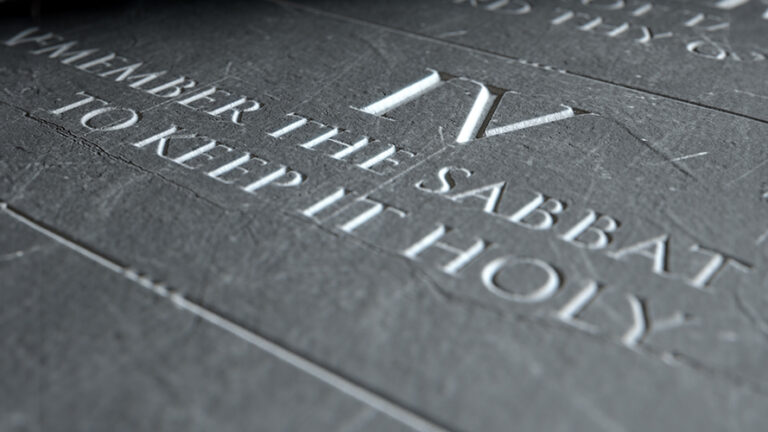
The Archbishop of Reggio made a powerful speech in which he said that the [Roman Catholic] Church's alteration of the fourth commandment ["Remember the Sabbath day and keep it holy"] clearly proved that tradition was above Scripture. As a result, on January 18, 1563, the Council of Trent decreed that tradition was above Scripture.59
England
"In the reign of Elizabeth, it struck many conscientious and independent thinkers (as it had struck some Protestants in Bohemia before) that the fourth commandment required them to observe not the first, but specifically the 'seventh' day of the week. "60
Russia - Council of Moscow
"The accused [Sabbath-keepers/subbotniki] were summoned, openly confessed the new faith and defended it. The most prominent among them ... Kuritsin, Ivan Maximov, Cassian and the archimandrite of the monastery in Novgorod, were sentenced to death and publicly burned in cages in Moscow on December 27, 1503. "61
Bohemia - the Bohemian Brothers
"I read from a passage in Erasmus that in the early Reformation period, during which he was writing, there were Sabbatarians in Bohemia who not only kept the seventh day, but also, as they were told ... took the Sabbath rest extremely seriously. "62
Germany - Dr. Eck against the reformers
"The Church, however, by virtue of its own authority and without the Scriptures, transferred the observance of Saturday to Sunday. "63
Europe
Around the year 1520, many of these Sabbath-keepers found protection at the country estate of Leonhard of Liechtenstein (at Nikolsburg), "since the princes of Liechtenstein adhered to the observance of the true Sabbath".64
India
"The famous Jesuit Francis Xavier called for the Inquisition. It was then set up in Goa, India, in 1560 to keep the 'Jewish evil' [Sabbath-keeping] in check. "65
Austria
"The Sabbatarians now exist in Austria. "66
Ethiopia - Ethiopian legate at the court of Lisbon (1534 AD)
"We therefore do not follow the Jews, but we follow the Messiah and his holy apostles when we keep this day. "67
Baptists
"Some were tortured because they would not rest on Sunday like the others, claiming that this was the holiday and law of the Antichrist. "68
Holland and Germany
Barbara of Thiers, who was executed in 1529, had declared: "God has commanded us to rest on the seventh day." Another martyr, Christina Tolinger, is quoted as follows: "About holy days and Sundays she said: 'In six days the Lord made the world, on the seventh day he rested. The other holy days were appointed by popes, cardinals and archbishops. "69
Finland - Letter from the Swedish King Gustav I Wasa to the Finnish people (December 6, 1554)
"Some time ago we heard that some people in Finland had fallen into the great error of keeping the seventh day, which is called Saturday. "70
SEVENTEENTH CENTURY
England (1618)
"Eventually, because she taught only five days a week and rested on Saturday, she was sent to the new prison in Maiden Lane ... Mrs. Traske served 15 or 16 years in prison for her opinion on the Saturday Sabbath. "71
England (1668)
"Here in England there are about nine or ten churches that keep the Sabbath, besides many scattered disciples that have been preserved in a very particular manner. "72
Hungary, Romania
However, because they rejected Sunday and rested on the Sabbath, Prince Sigismund Báthory ordered their persecution. Simon Péchi rose to the position of chancellor, making him the most powerful man in Transylvania after the prince. He studied his Bible and composed a number of hymns - mostly in honor of the Sabbath. Péchi was arrested and died in 1640.
Sweden and Finland
"At that time, we can find evidence of these views almost throughout Sweden, i.e. in Finland and northern Sweden. In the district of Uppsala, the peasants kept Saturday instead of Sunday. Around the year 1625, this religious trend became so strong in these countries that not only a large number of ordinary people began to keep Saturday as a day of rest, but also many priests. "73
India - Syrian Orthodox (1625)
"They sanctify Saturday. On Saturdays they have a solemn service. "74
North America
"Stephen Mumford, the first Sabbath-keeper in America, came from London in 1664. "75
Seventh-day Baptists (1671)
"... separated from the Baptist church to keep the Sabbath. "76
England - Charles I (1647)
"For it is nowhere written that Saturday is no longer to be kept, or that it has been changed into Sunday; therefore only the authority of the church can have changed the one and instituted the other. "77
England
"There arose among the English clergy in 1618 a violent controversy on two points: First, whether the Sabbath of the fourth commandment still applied; and secondly, on what basis the first day of the week might be kept as a 'Sabbath'. "78
Ethiopia
Jesuits tried to persuade the Ethiopian church to adopt Roman Catholicism. They influenced King Za Dengel to propose submission to the papacy (1604 AD) and "to forbid all his subjects to continue to observe Saturday under threat of severe punishment".79
Bohemia, Moravia, Switzerland, Germany
"One of the advisors and gentlemen at court was John Gerendi, leader of the Sabbatarians, a community that did not keep Sunday but Saturday. "80
England
The inscription on the tomb of Peter Chamberlain, the royal physician ... states that Chamberlain was "a Christian who kept the commandments of God and the faith of Jesus, was baptized about 1648 and kept the seventh day Sabbath for 32 years. "81
EIGHTEENTH CENTURY
Ethiopia
"The Syrian Orthodox gathered in the temple on the Sabbath before the Lord's Day and kept this day, as do the Ethiopians, as is evident from their profession of faith by the Ethiopian King Claudius. "82
Romania, Yugoslavia, Czechoslovakia (1760)
"Joseph II's Edict of Toleration did not apply to the Sabbatarians, some of whom lost all their property. "83
Germany - Tennhardt of Nuremberg
"He strictly adheres to the doctrine of the Sabbath because it is one of the Ten Commandments. "84
He himself says: "It cannot be proved that Sunday has taken the place of the Sabbath. The LORD God has sanctified the last day of the week. In contrast, the Antichrist has set apart the first day of the week. "85
Bohemia and Moravia (1635-1867)
"The situation of the Sabbatarians was terrible. Their books and writings had to be handed over to the consistory in Karlsburg to be burned down. "86
Moravia - Count Zinzendorf
In 1738, Zinzendorf wrote about his Sabbath-keeping: "Because I have been keeping the Sabbath as a day of rest for many years, while I use our Sunday to preach the Gospel. "87
North America - Bohemian Brethren after Zinzendorf arrived from Europe (1741)
"The special circumstance deserves attention that he decided with the church at Bethlehem to observe the seventh day as a day of rest. "88
Pennsylvania
Even before that, there was a small group of German Sabbath keepers in Pennsylvania.89
NINETEENTH CENTURY
Russia
"The majority, however, moved to the Crimea and the Caucasus, where they have remained faithful to their teachings to this day despite persecution. They are called Subbotniki or Sabbatarians. "90
China
"At this time Hung forbade the use of opium and even tobacco, as well as all intoxicating drinks; and the Sabbath was observed as a religious day. "91
"The seventh day is observed most scrupulously and strictly. The Taiping Sabbath is kept on our Saturday. "92
"When the Taiping were asked why they kept the seventh-day Sabbath, they replied that it was firstly because the Bible taught so, and secondly because their ancestors had kept it as a day of worship. "93
India and Persia
"Moreover, they continue to keep their Christian worship on the seventh day throughout our empire. "94
Denmark
"This excitement was not without effect. Pastor M. A. Sommer began to keep the seventh day and wrote an impressive article about the true Sabbath in his church newspaper Indovet Kristendom, No. 5, 1875.95
Sweden - Baptists
"We shall now endeavor to show that the sanctification of the Sabbath has its foundation and origin in a law which God Himself instituted at creation for the whole world, and is consequently binding on all men at all times. "96
USA (1845)
"Thus we see Daniel 7:25 fulfilled, the little horn that changes 'times and law.' Hence it appears to me that all who keep the first day as the Sabbath are Pope's Sunday-keepers and God's Sabbath-breakers. "97
Seventh-day Adventists
The Seventh-day Adventists emerged in North America in 1844 and had spread almost all over the world by the end of the 19th century. Their name derives from their doctrine of the Seventh-day Sabbath and the Second Coming (Advent) of Jesus. In 1874 they came to Europe; in 1885 to Australasia; in 1887 to Africa and in 1888 to both Asia and South America.
Today, the question still arises as to whether followers of Jesus remember and keep holy His Sabbath, or whether they honor a day based solely on human tradition. Sunday observance is based on the authority of the Roman church, the Sabbath on the commandment of the Lord. As these written accounts show, faithful Christians preferred to lay down their lives rather than be unfaithful to the Lord of the Sabbath.
"Blessed are those who do his commandments, that they may have right to the tree of life and enter through the gates into the city." (Revelation 22:14 S)
The unabridged manuscript can be read on the Internet at the following address: www.hwev.de/Publikationen/Der-Sabbat.pdf
Gordon Anderson, based on John F. Coltheart, The Sabbath of God Through the Centuries (1954)
Title of the original English edition The Sabbath of Jesus Christ Through the Ages
Translation: Andrea Kotlow
Linguistic adaptation: Kai Mester, Edward Rosenthal
Endnotes
1 Eusebius, Ecclesiastical History, book 3, ch. 5
2 William Prynne, Dissertation on the Lord's Day Sabbath, (1633), pp. 33, 34, 44
3 Theodor Zahn, Geschichte des Sonntags, in: Skizzen aus dem Leben der alten Kirche, pp.160-238, Deichert'sche Verlagsbuchhandlung: Leipzig (1908), p.206. pp. 13, 14
4 Johann Carl Ludwig Gieseler, Lehrbuch der Kirchengeschichte, Bonn (1845), vol. 1, ch. 2, para. 30, p. 83
5 Edwards Brerewood, A Learned Treatise of the Sabbath, Oxford (1630), p. 77
6 Origen, Homily on Numbers 23, para. 4, quoted in: Jacques-Paul Migne, Patrologia Graeca, (1856-1861) vol. 12, pp. 749, 750
7 Alphonse Mingana, Early Spread of Christianity in Central Asia and the Far East, Manchester (1925), vol. 10, p. 460
8 Arthur Lloyd, The Creed of Half Japan, London (1911), p. 23
9 Peter Heylyn, History of the Sabbath, London (1636), part 2, para. 5, pp. 73, 74,
10 Joseph Bingham, Antiquities of the Christian Church, London (1708-1722), vol. 2, book 20, ch. 3, para. 1, pp. 1137-1138
11 Ambrose, De Morbius, Brachmanorium Opera Omnia, 1132, quoted in Jacques-Paul Migne, Patrologia Latina, (1844-1855) vol. 17, pp. 1131, 1132
12 Benjamin George Wilkinson, Truth Triumphant, Mountain View, CA (1944), p. 308, footnote 27
13 Heylyn, p. 1612
14 Wilkinson, p. 170
15 De Lacy O'Leary, The Syriac Church and Fathers, London (1909), pp. 83, 84
16 Charles Joseph Hefele, A History of the Councils, Edinburgh (1895), vol. 2, book 6
17 Socrates Scholasticus, Ecclesiastical History, book 7, chapter 19
18 Heylyn, part 2, ch. 2, p. 44
19 Heylyn, p. 416
20 Lyman Coleman, Ancient Christianity Exemplified in the Private, Domestic, Social and Civil Life of the Primitive Christians, Philadelphia (1853), ch. 26, para. 2, p. 527
21 Francis White, Lord Bishop of Ely, Treatise of the Sabbath Day, London (1653), p. 219
22 Wilkinson, p. 68
23 Cain Adamnan, Life of St. Columba, Dublin (1857), p. 96
24 Bellesheim, History of the Catholic Church in Scotland, vol. 1, p. 86
25 James Trapier Ringgold, The Legal Sunday, p. 267
26 James Clement Moffat, The Church in Scotland, Philadelphia (1882), p. 140
27 Nicene and Post-Nicene Fathers, Series 2, Vol. 13, p. 13, Letter 1
28 Realenzyklopädie für Protestantische Theologie und Kirche, article: Nestorians; Henry Yule, The Book of Ser Marco Polo, London (1903), vol. 2, p. 409
29 Schaff-Herzog, The New Encyclopaedia of Religious Knowledge, (1891), article: Nestorians; also Realenzyklopädie für protestantische Theologie und Kirche, article: Nestorians
30 M. l'Abbe Huc, Christianity in China, London (1857), vol. 1, chap. 2, pp. 48, 49
31 Responsa Nicolai Papae I and Consulta Bulgarorum, Responsum 10, cited in: Mansi, vol. 15, p. 406; also Hefele, vol. 4, para. 478
32 Hefele, vol. 4, pp. 368-352, para. 478
33 Joseph Adam Gustav Hergenröther, Photius, Regensburg (1867) vol. 1, p. 643
34 Hergenröther, Handbuch der allgemeinen Kirchengeschichte, (1879), vol. 1, p. 527
35 Wilkinson, p. 232
36 Andrew Lang, A History of Scotland From the Roman Occupation, Edinburgh (1900), vol. 1, p. 96 30 122010 Foundation for a Liberated Life
37 Schaff-Herzog, ibid.
38 Jean Paul Perris, Luther's Fore-Runners, London (1624), pp. 7, 8
39 William Forbes Skene, Celtic Scotland, Edinburgh (1876-80), vol. 2, p. 350
40 John Nevins Andrews, History of the Sabbath, Battle Creek, MI (1859/61), p. 672
41 Migne, Patrologia Latina, vol. 145, p. 506; Hergenröther, vol. 3, p. 746
42 John Mason Neale, A History of the Holy Eastern Church, London (1850), vol. 1, p. 731.
43 John McClintock, James Strong, Cyclopaedia of Biblical, Theological and Ecclesiastical Literature, (1867-1881), vol. 1, p. 660
44 David Benedict, General History of the Baptist Denomination, Boston/London (1813), vol. 2, p. 431
45 Adam Blair, History of the Waldenses, Edinburgh (1833), vol. 1, p. 220
46 Christoph Ulrich Hahn, Geschichte der Ketzer im Mittelalter, Stuttgart (1845-50), vol. 1, pp. 13, 14
47 Abram Herbert Lewis, Seventh Day Baptists in Europe and America, Plainfield (1910), vol. 1, p. 29
48 Source not cited, editor's note]
49 Peter Allix, Ancient Church of Piedmont, Oxford (1821), p. 169
50 Reinerus Sacho, The Roman Inquisitor, c. 1230
51 [source missing, editor's note]
52 Hahn, vol. 3, p. 209
53 Samuel Koranteng-Pipim, Remember the Sabbath Day; K. Owusu-Mensa: Onyame Kwame, The Akan God of Saturday.
54 Thomas Armitage, A History of the Baptists, New York (1890), p. 318; Robert Cox, The Literature of the Sabbath Question, Edinburgh (1865), vol. 2, p. 201
55 Wilkinson, p. 309
56 Cox, vol. 2, pp. 201, 202; Wilkinson, p. 246
57 R. Keyser, The History of the Norwegian Church under Catholicism, Oslo (1858), vol. 2, p. 488.
58 Dip. Norveg, vol. 7, p. 397
59 Heinrich Julius Holtzmann, Kanon und Tradition, Ludwigsburg (1859), p. 263
60 Chambers, Cyclopedia, (1867), article: Sabbath, vol. 8, p. 462
61 Herman Sternberg, Geschichte der Juden in Polen unter den Piasten und Jagiellonen, Leipzig: (1878), pp. 1117-1122
62 Cox, vol. 2, pp. 201, 202
63 Johannes Eck, Enchiridion, Cologne (1573), pp. 78, 79
64 Andrews, p. 649
65 Walter Frederic Adeney, The Greek and Eastern Churches, New York (1908), pp. 527, 528
66 Martin Luther, Lecture on the Book of Genesis, (1535-45)
67 Michael Geddes, Church History of Ethiopia, London: (1696), pp. 87, 88
68 Sebastian Frank, (1536)
69 Thieleman Janszoon van Braght, Martyrology of the Churches of Christ, commonly called Baptists, during the era of the Reformation, London: (1850), vol. 1, pp. 113, 114
70 State Library at Helsingfors, Imperial Register of 1554, part B.B. sheet 1120, pp. 175-180a
71 Ephraim Pagitt, Heresiography, London (1654), p. 196
72 Stennet's Letters, 1668 and 1670, quoted in Cox, vol. 1, p. 268
73 History of the Swedish Church, vol. 1, p. 256
74 Samuel Purchas, Hakluyutus Posthumus or Purchas, His Pilgrimes, London (1625), part 2, pp. 1268 31
75 James Bailey, History of the Seventh Day Baptist General Conference, Toledo, Ohio (1866), pp. 237, 238
76 Ibid, pp. 9, 10
77 Robert Cox, Sabbath Laws and Sabbath Duties, Edinburgh (1853), p. 333
78 Joseph Timothy Haydn, Dictionary of Dates, (1841), article: Sabbatarians, p. 602
79 Geddes, p. 311; Edward Gibbon, Decline and Fall of the Roman Empire, (1776-78), ch. 47
80 Lamy, History of Socinianism, (1723), p. 60
81 [source missing, translator's note]
82 Joseph Abudacnus, Historia Jacobitarum, Oxford (1675), pp. 118, 119
83 Volume 2, p. 254
84 Johann Albrecht Bengel, Leben und Wirken, Stuttgart (1836), p. 579
85 Johann Tennhardt, Schriften aus Gott, Tübingen (1838), p. 49
86 Adolf Dux, Aus Ungarn, Leipzig: (1880), pp. 289-291
87 Nikolaus Ludwig von Zinzendorf, Büdingische Sammlung, para. 8, Leipzig (1742), p. 224
88 Ibid. S. 5, 1421, 1422
89 Israel Daniel Rupps, History of Religious Denominations in the United States, Philadelphia (1844), pp. 109-123
90 Sternberg, p. 124
91 Augustus Frederick Lindley (Lin-Le), The History of the Ti-Ping Revolution, vol. 1, pp. 36-48, 84
92 Ibid, p. 319
93 Abram Herbert Lewis, A Critical History of the Sabbath and the Sunday, Plainfield (1903)
94 Claudius Buchanan, Christian Researches in Asia, Cambrigde (1811), p. 143
95 Advent Tidende, May 1875
96 Evangelisten, Stockholm, 30.05.-15.08.1863, p. 169 - Organ of the Swedish Baptist Church
97 T. M. Preble, A Tract, February 13, 1845; in: George R. Knight, 1844 and the rise of Sabbatarian Adventism, (1994)
Source: hoffnung-weltweit.info